
The AI-native design workflow: how our studio actually uses AI end to end
AI is not a magic button. It is a set of leverage points across research, exploration, and production. Here is exactly where we apply it, and where we deliberately do not.
AI & Design
As products make more decisions on the user's behalf, trust becomes an interface problem. These are the patterns that make AI legible instead of magical.

When software decides for people, the question is no longer just what it did, but why. As products hand more choices to models, trust becomes an interface problem, and explainability moves from a compliance checkbox to a core UX concern.
This is a working set of patterns for making AI legible instead of magical, plus the trap that undoes most of them: over-explaining.
Pattern 1
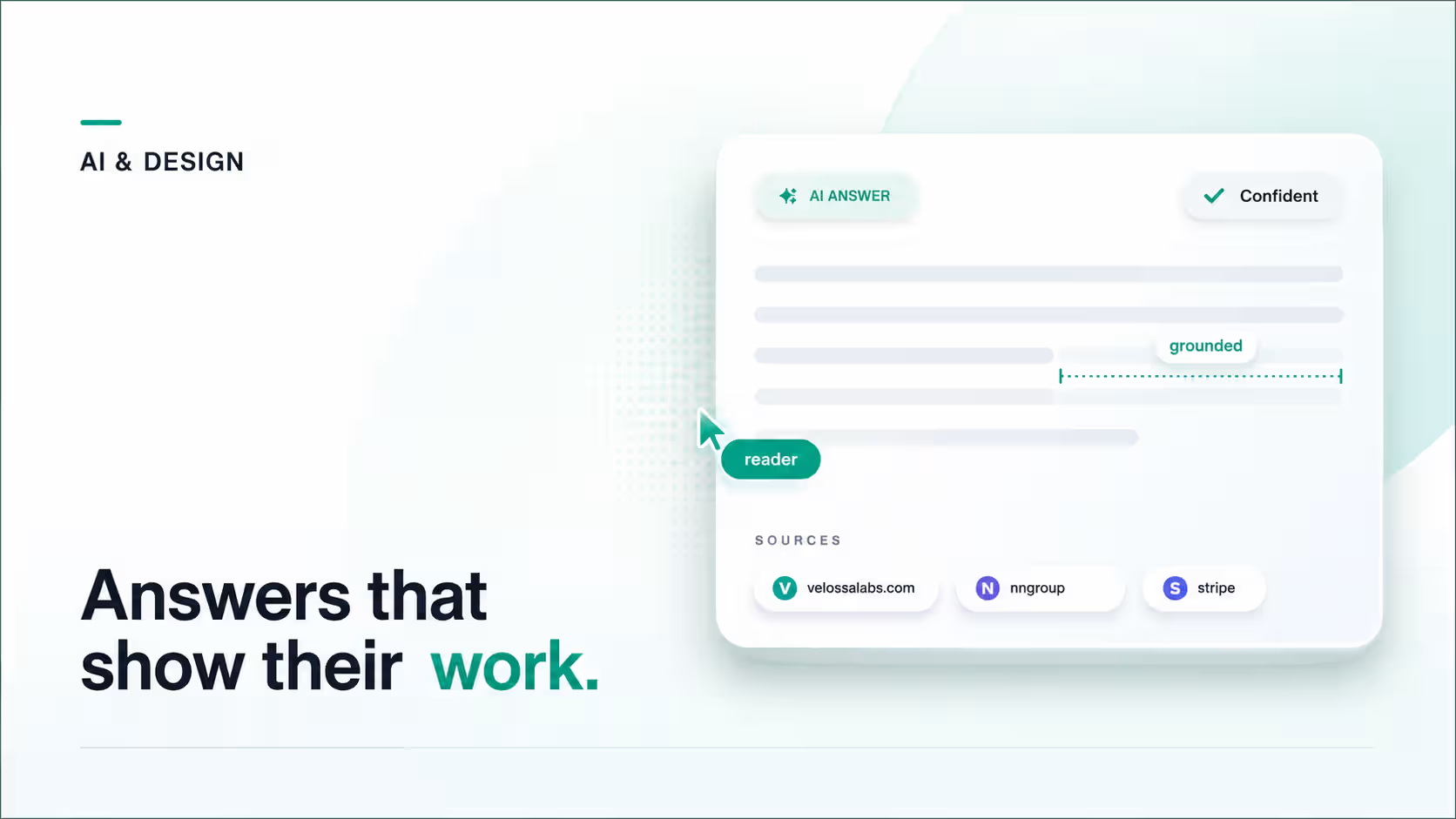
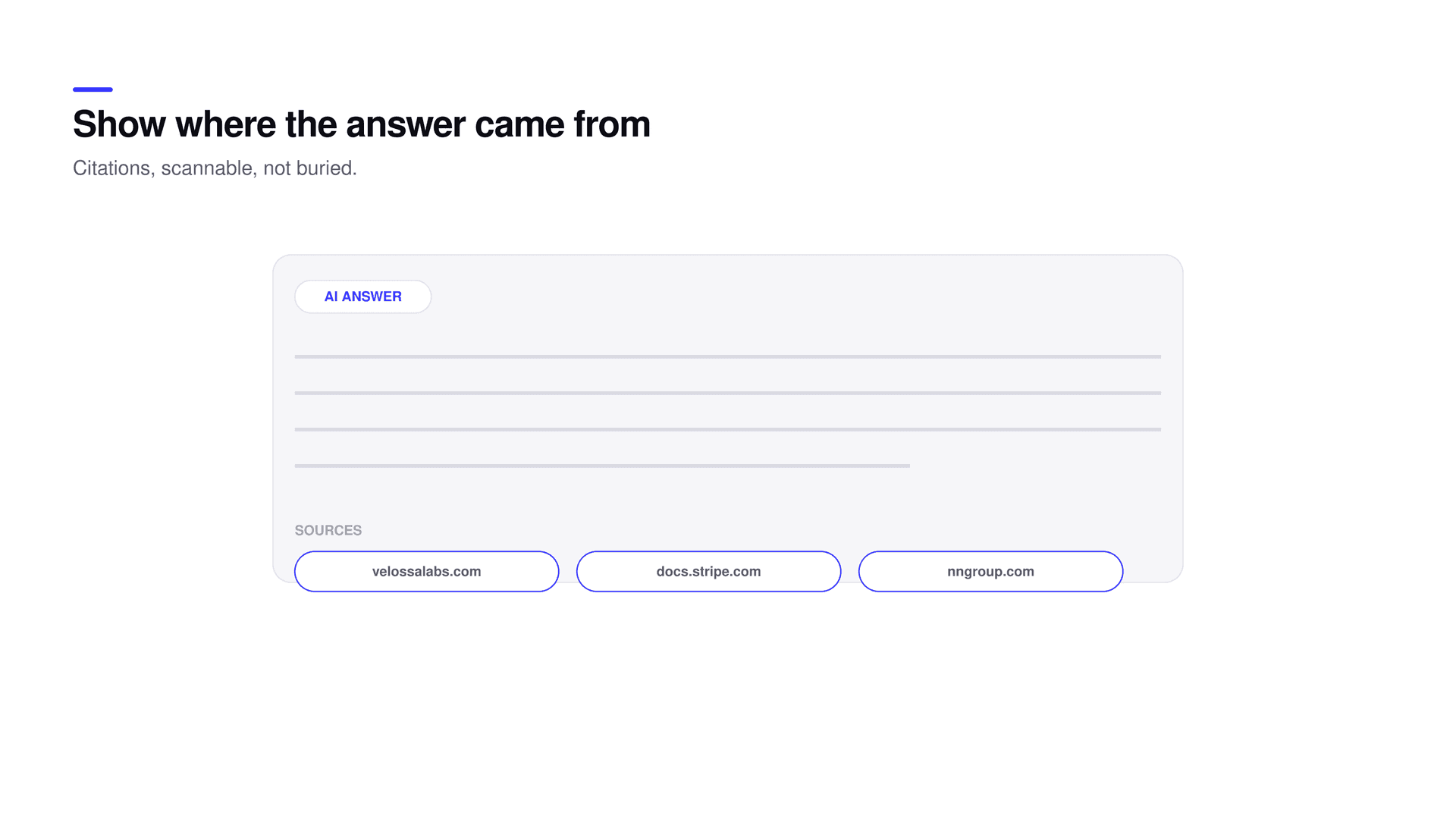
Source attribution is the single highest-trust pattern. When a model produces an answer, show the sources it drew from, and let people click through to verify. This does two things: it lets users check the work, and it signals that the system is grounded in something real rather than confidently inventing.
The design detail that matters: make sources scannable, not buried. A quiet row of citations under an answer beats a hidden panel nobody opens.

Pattern 2
Written by
Jayesh Velossa
Founder & Creative Director
A sure result and a guess should not look identical. Distinguish them. When confidence is low, say so plainly and shape the interface to invite correction rather than acceptance. A guess presented as fact is how AI features lose trust in a single wrong answer.
Avoid fake precision. A percentage that the model cannot actually justify is worse than an honest 'this is my best guess, check it.'
Pattern 3
Never let an automated decision be a one-way door. If the system acts on the user's behalf, the action must be easy to see and undo. Reversibility is what makes automation feel like help instead of risk, because the cost of a wrong call drops to near zero.
The trap: over-explaining
A wall of reasoning is as useless as no reasoning. Aim for the smallest explanation that lets someone decide whether to trust the result and how to override it. Explainability is a scalpel, not a firehose.
Pattern 4
When you do explain, write it for a non-expert. A short 'why this' in human language beats an accurate but unreadable dump of features and weights. The goal is not to teach the user how the model works. It is to give them enough to decide and act.


Get explainability right and an AI feature feels like a capable colleague. Get it wrong and it feels like a slot machine.
VelossaLabs
None of these patterns are exotic. They are the interface equivalent of showing your work: cite the source, be honest about certainty, make actions reversible, and explain briefly in plain words. Products that do this earn the right to make more decisions for people, because people can see when to trust them and when not to.