7 min read
Information architecture for complex products
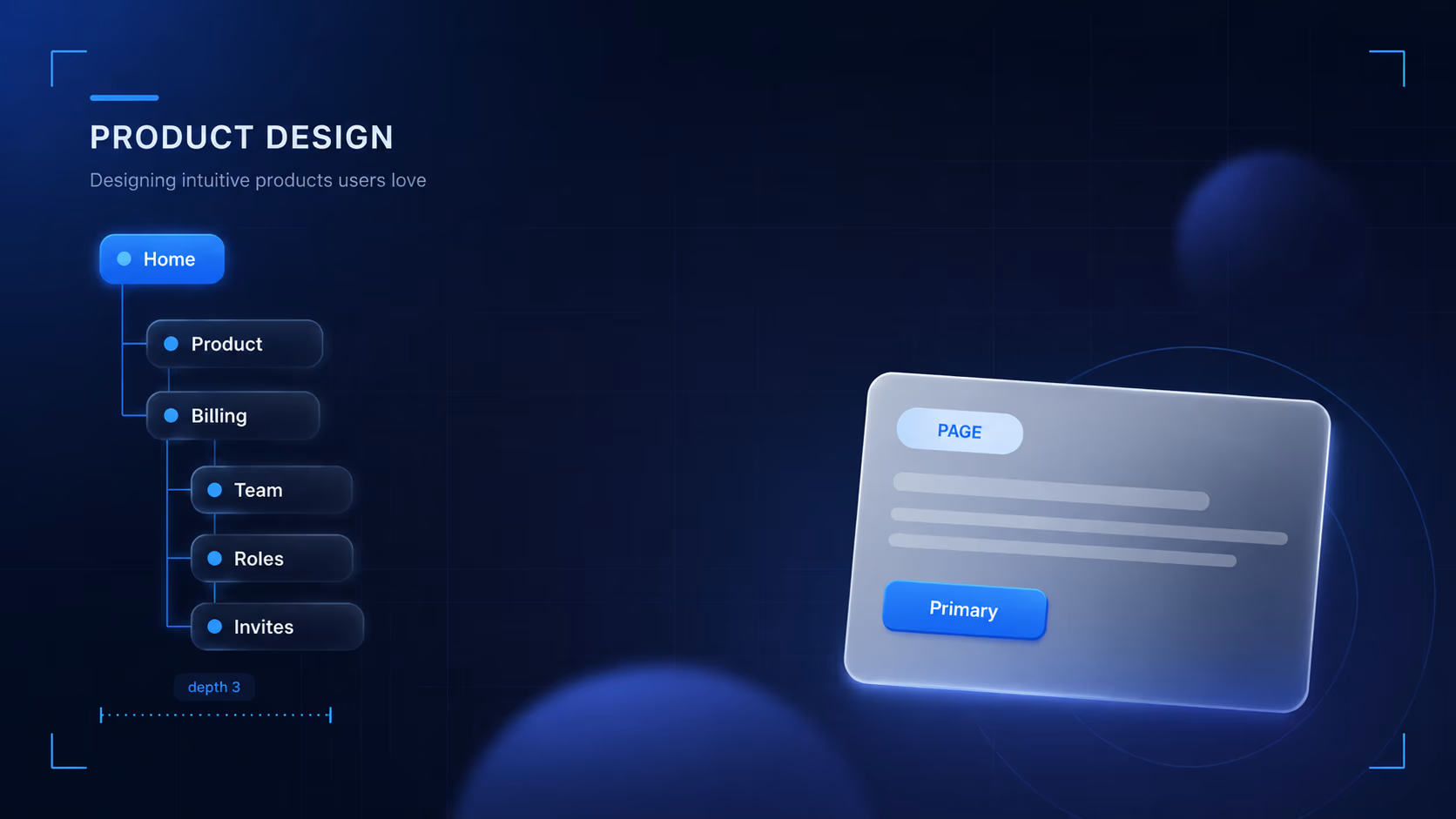
When a product has depth, structure is the feature. How to organize dense functionality so people can actually find and understand it.
IAnavigationcomplex products

UX Research
You do not need a research team to make evidence-based decisions. A lean loop that fits inside a build cycle.
TL;DR
Startups skip research because they picture months of studies, recruited panels, and a report nobody reads. The useful version is much smaller and fits inside a normal build week. Done right it is the cheapest insurance available against the most expensive mistake a young product can make, which is building the wrong thing well. This covers the core loop lean enough to run continuously, why five users is usually enough, how to interview so people tell you the truth, how to make sense of what you hear without a research team, and how to research at all when you do not yet have users to talk to.
The loop
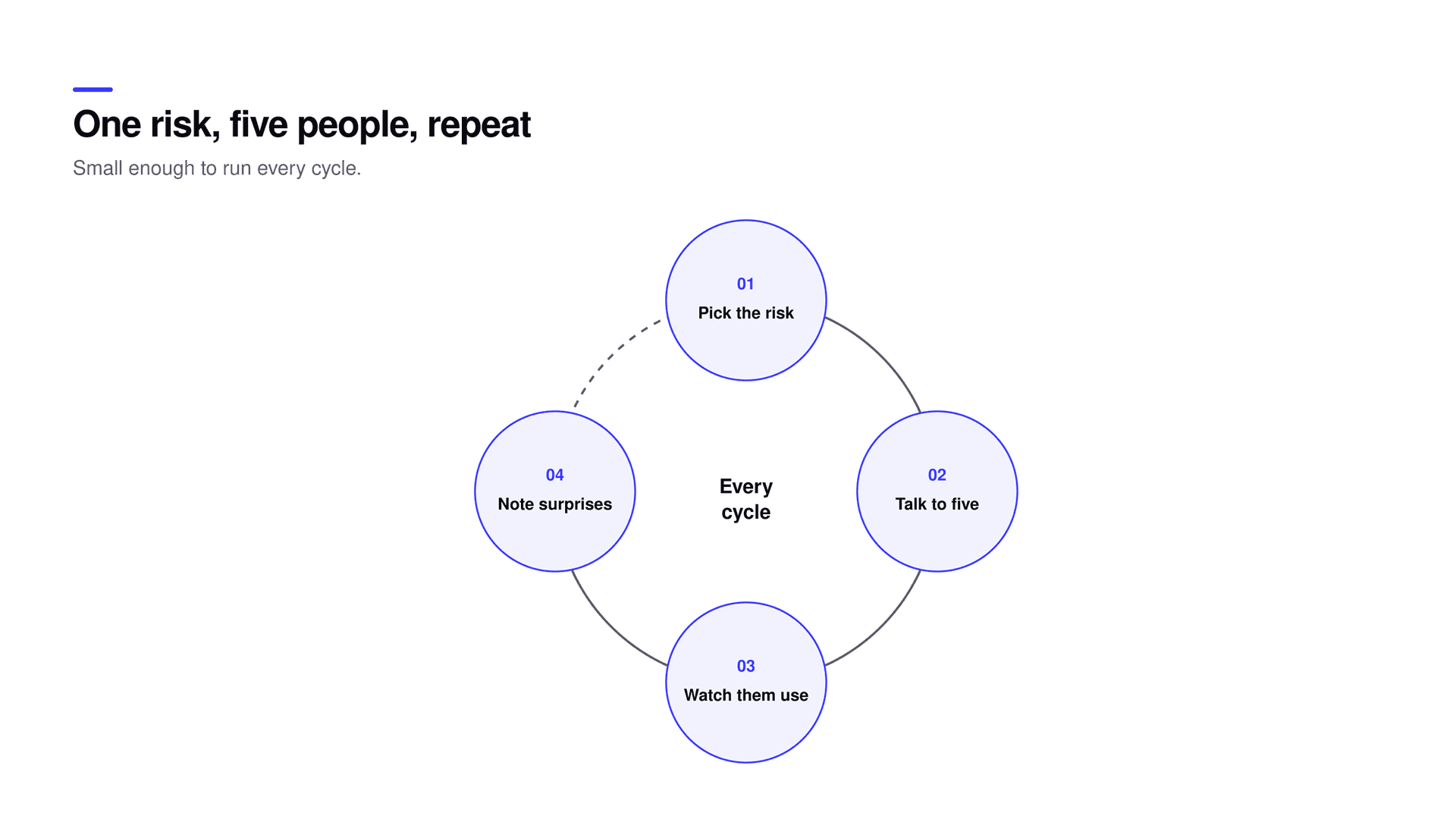
Pick the single riskiest assumption you are about to build on, the thing that, if wrong, wastes the most work. Talk to five of the right people. Watch them try to use the thing, or their current workaround for the problem. Write down what surprised you. That is the entire loop, and it exposes most of the serious problems, because a long-standing finding in usability research is that testing with around five users uncovers the large majority of usability issues in a given flow, after which each additional user mostly repeats what you already saw. You are hunting patterns, not statistics. Three people hitting the same wall is a finding you can act on. You do not need a hundred responses to believe it, and waiting for a hundred is usually just an excuse to keep building without looking.
The most important discipline in lightweight research is to trust behavior over opinion, because what people say they want is unreliable and what they actually do is not. People are poor predictors of their own future behavior and naturally agreeable when asked, so a question like "would you use a feature that does this" reliably produces a polite yes that means nothing. Two habits fix most of this. First, watch people do the real task instead of asking them to imagine it, since watching removes the guesswork on both sides. Second, when you must ask rather than observe, anchor the question to a specific real event: "tell me about the last time you had to reconcile that report," not "how do you usually feel about reconciliation." The last real time actually happened, so the answer is memory rather than fantasy. Stated preference is where research quietly goes to lie to you, and specific past behavior is the antidote.
Close the loop this cycle
Research that does not change a decision now is theater. Tie every study to a specific choice you are about to make, and act on it before the insight goes stale. Small, frequent, and acted upon beats big, rare, and shelved.
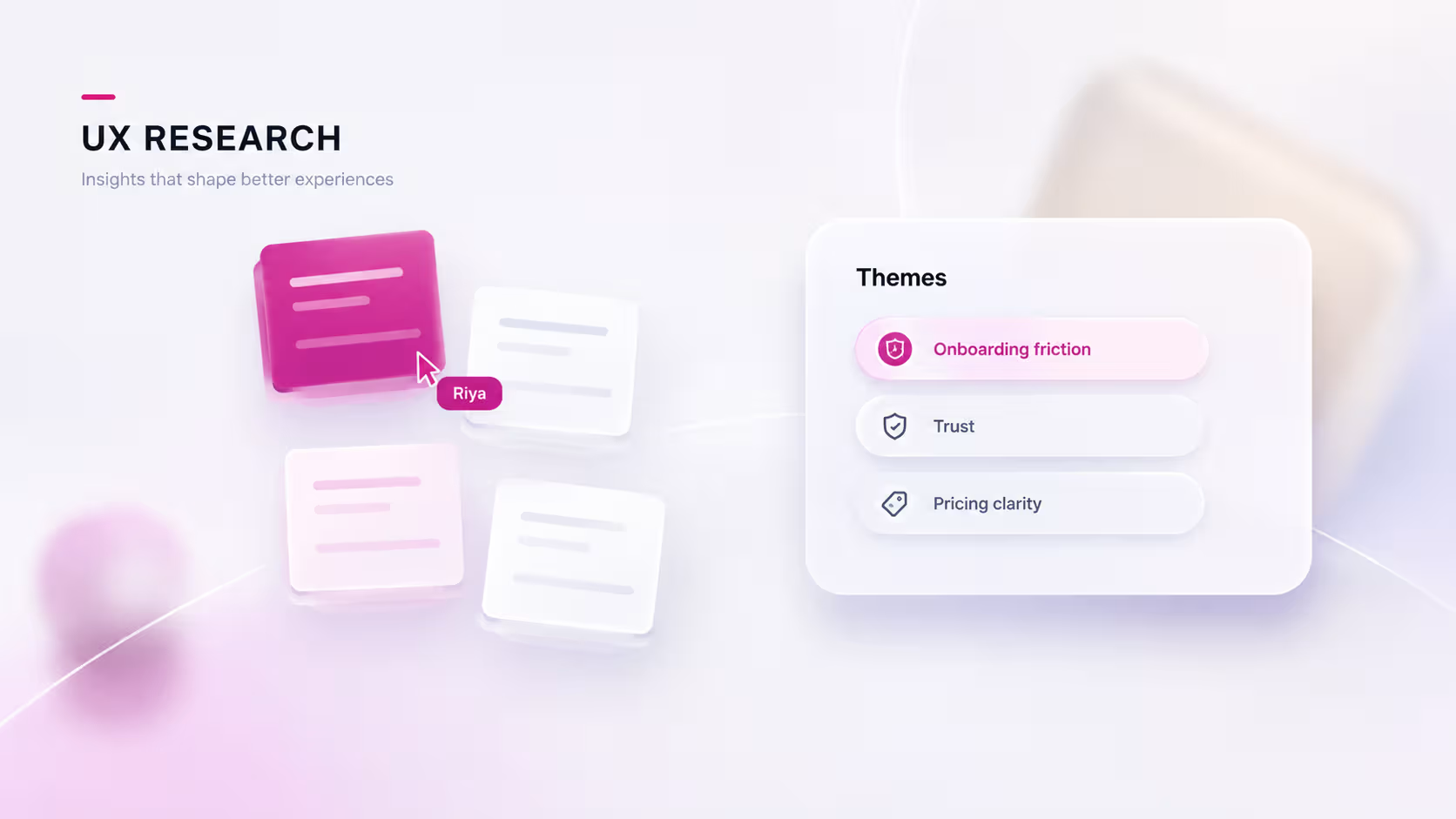
Synthesis sounds like it needs a specialist, but the lightweight version is something any team can do in an hour. After a few sessions, write each notable observation on its own line, a real quote or a thing you watched someone struggle with, and group the lines that are about the same underlying problem. The groups that keep filling up are your themes, and a theme that three of five people hit is worth acting on. Resist the urge to average opinions into a bland summary; the value is in the specific, repeated friction, not in a consensus that smooths it away. Then, for each strong theme, name the decision it should change this cycle. If a theme does not change a decision, it is interesting rather than useful, and you can let it go.
Lean does not mean one tool for everything. When you have users, a five-person usability test on a prototype answers "can they actually use this," and a first-click test answers "do my labels lead people to the right place." When you cannot talk to users yet, which is common very early, you still have honest options. Analyze how people solve the problem today, including the spreadsheets and workarounds they have cobbled together, because those reveal the real requirements. Study competitors and, more usefully, their public complaints and support forums. Run a fake-door test, where you put the feature’s entry point in front of people and measure whether anyone tries it, to gauge demand before building. Or run a concierge test, where you deliver the outcome manually behind the scenes, to learn what people actually need before you automate it. The bar is never a perfect study. It is one honest signal from reality before you commit weeks of build to a guess.
| Question | Lean method | When |
|---|---|---|
| Can people use it? | 5-user usability test | You have a prototype |
| Do the labels work? | First-click test | Any stage |
| Do people want it? | Fake-door test | Before building |
| What do they really need? | Concierge test | Very early |
Five users, watched closely, will teach you more than five hundred surveyed at a distance, and cost a hundredth as much.
How many users do you need for usability testing?
About five is usually enough to surface the large majority of usability problems in a given flow. Beyond that you see diminishing returns, so it is better to run several small five-user rounds than one large study.
Why trust what users do over what they say?
Stated preferences are unreliable, because people are poor predictors of their own behavior and tend to be agreeable in interviews. Observed behavior, and questions anchored to specific past events, reveal what actually happens instead of what sounds good.
How do you research before you have any users?
Study how people solve the problem today, analyze competitors and their complaints, run a fake-door test to measure demand, or run a concierge test where you deliver the outcome manually. Each gives an honest signal without a live user base.
How do you analyze research without a research team?
Write each notable observation on its own line, group the lines that share an underlying problem, and treat the groups that keep filling up as themes. For each strong theme, name the decision it should change this cycle. It takes about an hour.
How often should a startup do research?
Continuously, in small doses. Tie each lightweight study to a specific decision you are about to make and act on it that cycle. Small and frequent beats big and rare, which tends to get shelved unread.
Lean research is a habit, not a project. One risk, five people, real observation, honest synthesis, and a decision changed this cycle. Run that loop continuously and you make evidence-based calls at startup speed, without a research team and without the months you were dreading. What you learn feeds straight into an information architecture that matches the user’s mental model and an MVP scoped to the one claim you need to prove. If you want a research habit set up inside your team, it can be built with you.
Related reading